Strategy
Security
Latest articles
Behind the loss of cultural heritage lies a crisis of public trust.
I. Silence after the scandal
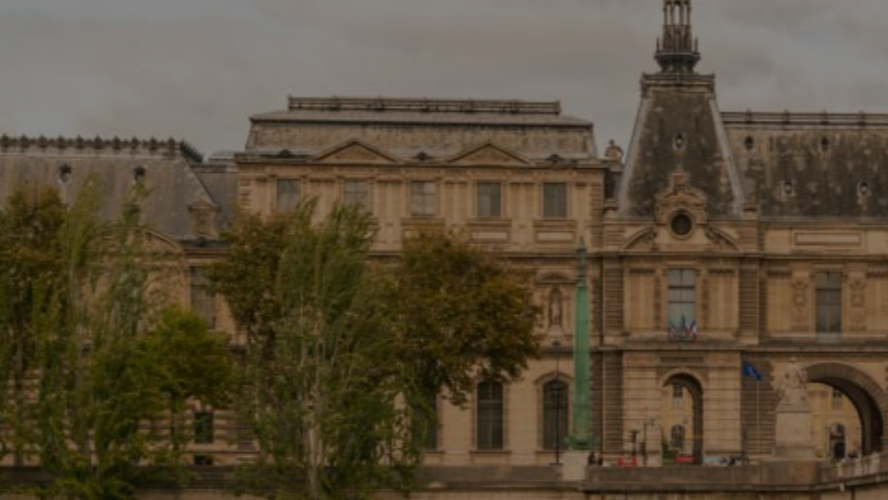
A few days after the Louvre burglary, the topic faded away. Media panels shifted their focus, ministries returned to routine. This silence does not reflect indifference, but discomfort. The theft does not merely reveal a security failure; it exposes a way of avoiding responsibility. The country reacts with brief outrage, then withdraws. And in that retreat, trust erodes. Those who want to take responsibility find themselves prevented from doing so.
II. An attack on a symbol
The stolen jewels held considerable historical value, but the damage goes beyond material loss. The Louvre embodies the continuity of the State, its authority, its influence. What was attacked is the coherence of a country that sees itself as the guardian of its heritage. Observed from abroad, the scene gives an impression of disorder. And those who would seek to restore that coherence run into administrative, political, and hierarchical barriers.
III. Security as a mirror of power
To protect is not to lock down a system, but to assume a duty. Security reveals how a country relates to truth: when an incident occurs and no one answers for it, official discourse loses its substance. The failure lies not only in the systems in place, but in how responsibility is inhabited. And those who try to assume it are often silenced.
IV. Reputation as a national asset
Reputation does not belong only to brands; it also underpins nations, institutions, and public discourse. An entity that no longer protects what it stands for endangers its credibility. What is at stake at the Louvre is the weakening of a symbol whose significance extends beyond borders. And those who want to restore this credibility lack the space to act.
V. What France reveals
The theft did not merely move objects; it exposed an attitude: that of a State that speaks of transparency while avoiding admission. What the world perceives is not the loss of a treasure, but the difficulty of telling the truth when it is inconvenient. A country’s international reputation rests on the clarity of its responses. And those who would speak honestly face the fear of displeasing.
VI. Add Lumen’s position
Add Lumen operates where security meets governance. We work on aligning actions, values, and communication. Protecting a place, expertise, or image follows the same logic: preventing before trust collapses. Security is not just protection; it structures credibility. And those who dare to defend this coherence often carry the burden of common sense alone.
“The Louvre theft is not a story of precious stones, but a lesson in power.”
Related articles

Strategy
Fortitude as strategic stability
Fortitude is not a reaction to pressure, but the ability to maintain strategic clarity within it.
1 min
Strategy
Having a structured geopolitical framework of analysis
Can a leader steer an international organization without a solid and operational geopolitical understanding in the face of global tensions?
2 min
Protection
Pragmatism as a requirement of reality
Pragmatism tests leadership where strategy meets reality.
1 min